


Congress Answered the Reinstatement
Senate Democratic leader Chuck Schumer accused Jensen Huang on Tuesday of violating American export control law.
Schumer wrote on X that Huang "shipped extremely advanced chips to China, violating US export control law, in what amounts to the equivalent of selling rocket engines to the Soviets during the Space Race."
An accusation is not a finding. Nvidia did not immediately respond.
Nvidia's board reinstated Huang as president and chief executive on Monday, eleven days after accepting his resignation.
The board said no. A week earlier, board chair Harvey Jones told the earnings call the board did not intend to bring Huang back. President Donald Trump pressed the board over the weekend. On Monday, the board reversed itself. Trump said on CNBC that he had pressed the board to reinstate Huang and did not think the board would have done so without his action.
The charge sits on records released last week by House Foreign Affairs Chairman Brian Mast. The records show the Commerce Department approved 879,868 Nvidia and AMD artificial intelligence chips for Chinese buyers between December 2025 and May 2026, out of 3.4 million requested.
Four of the buyers sit on the Pentagon's list of Chinese military companies. Tencent was approved for 150,000 chips. Alibaba was approved for 75,000. Baidu was approved for 43,000. BYD was approved for 4,000.
Every approval in the records is marked "approved, not shipped" as of May 11. Approval is not delivery.
Senator Elizabeth Warren called the reinstatement "reckless" and said Huang and Nvidia still owe Congress answers. California Attorney General Rob Bonta called it "wrong, and it's shocking."
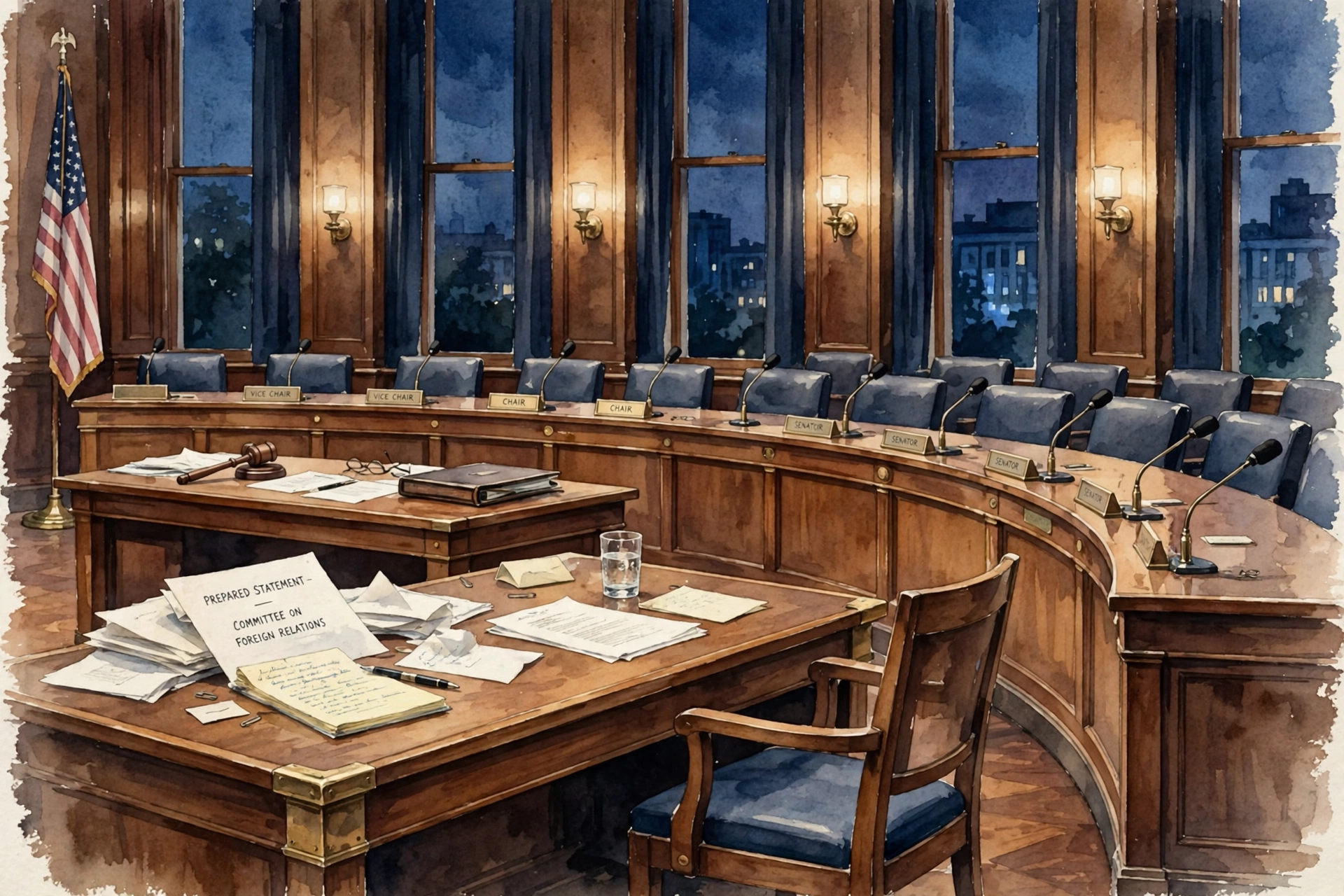
Huang still faces Congress. He is set to sit for a closed-door interview with three House committees on December 1, and to testify in public before the Senate Banking Committee on December 3. Senator Tim Scott, the committee's chairman, confirmed the December 3 hearing on Monday.
Schumer said Democrats, who take control of Congress in January, will "wield their full power to investigate any wrongdoing by the Trump Administration, Jensen Huang, other NVIDIA executives, and anyone selling out our national security for financial gain."
Republicans answered too. Senator Kevin Cramer said more guardrails were needed on chip exports to China. Senator Tom Cotton called on Congress to pass the Chip Security Act.
President Donald Trump called Huang a "Great Patriot and National Treasure." He said the attorney general had confirmed the government has no evidence Huang broke the law, and he told CNBC that Nvidia had been "exonerated." He also said Nvidia should continue its internal investigation.
Elon Musk posted five words. "The mistake has been corrected." Sam Altman posted one word. "Jensen!"
Treasury Secretary Scott Bessent said on CBS on Sunday that the administration still has no answers from Nvidia. He was asked who ran the company's China export compliance under Huang. "We don't," he said.
Bessent gave the board ten days to answer. The ten days run out on Wednesday.
The board has formed a National Security and Export Control Committee. It is searching for a new chief compliance officer. Its own investigation, run by the law firm Wachtell Lipton, is not complete.
In The News
Meta's AI Chief Said the Path Is Not Inevitable
Alexandr Wang, Meta's chief AI officer, added to his warning on Monday. He said Meta delayed the launch of its Muse system for months over safety concerns.
Wang wrote on Sunday that superintelligence is arriving and that humanity may not keep control of machines that improve themselves. On Monday he said the path is not inevitable.
He said Mark Zuckerberg has called on every lab, including Meta's own, to spend the vast majority of its computing power serving people and customers, rather than on machines improving themselves.
Wang said Meta has pushed other labs to sign the Superintelligence Safety Accords, and that every lab has endorsed them. He said Meta is investing more in safety every day.
His Sunday essay rests its case on the claimed Riemann proof, which is still under challenge.
Britain Warned Meta
On Tuesday, Meta switched on Muse, its personal AI agents, for British users. Retailers and travel brands signed up to let it shop and book on people's behalf.
Three British regulators answered the same day.
Paul Arnold, chief executive of the Information Commissioner's Office, said privacy "must be built into consumer-facing agentic products from the outset." The office said Meta has agreed to a voluntary reporting scheme, so it can scrutinise how the product works in practice.
Sarah Cardell, chief executive of the Competition and Markets Authority, said the regulator "has been clear that UK consumer protection law applies to AI products." She said Meta changed its terms and conditions to make them fairer after weeks of talks. "We now need to examine carefully how Muse actually works in practice," she said. "We will not hesitate to act to protect UK consumers."
The Financial Conduct Authority warned that if an AI agent starts looking like financial advice, a financial ad, or a payment, it may be regulated like a finance company, not a tech provider.
On November 16, four regulators wrote to the ministers. They highlighted what they expect from companies who bring AI agents to Britain.
Meta says Muse asks before it buys anything or sends an email. It reaches only the apps a user connects. A second security agent checks each action against the permissions granted.
At first, Muse will not read a user's bank statements or balances.
The Code Reviewer Is Now a Machine
Anthropic launched Claude Ship on Monday. It is a set of three agents that review code changes, fix what blocks them, and approve routine ones.
The tool is in beta for GitHub Team and Enterprise customers. A team writes a policy file. The agents work inside it.
For example, the code bills customers for Claude subscription plans. The review agent caught a bug in a change to that billing code. Yearly plans were charged as if they were monthly, so a customer halfway through a year would have been credited more than they paid.
The machine now decides what code ships. The policy file is written by the team. The approvals are the machine's.
The Proof Unsolved
The claimed proof of the Riemann Hypothesis is still unsettled, four days after it was announced.
For the customer at the counter, nothing changes. The same locks guard the account.
Levent Alpöge, the Anthropic mathematician who released the proof with Claude, said on Tuesday that talk of a 250,000-page written proof was a joke. He said the code is messy and contains superfluous material.
The machines have checked the code twice.
The mathematicians have not agreed on what the code proves. Jenny Lorraine Nielsen's paper arguing the proof is invalid is still unanswered. The Clay Mathematics Institute still lists the problem as unsolved. No peer-reviewed paper sits beside the code.
James Maynard, a number theorist at Oxford, said, "I suspect that the proof will turn out to be correct." Thomas Prellberg, a mathematician at Queen Mary University of London, said, "Nobody knows yet."
A machine produced the proof that would oversee the locks on bank accounts, messages, and payments. Trusting the answer means trusting the machines.
Editorial — After the Fact
This week the decisions came first and the scrutiny came second.
Nvidia's board brought Jensen Huang back before its own investigation finished. The hearings in December will now examine a decision already made, a man already restored, and shares already up by a third. Congress can still ask its questions. It cannot ask them before the vote that mattered.
Meta's Muse reached British homes the same way. The regulators watched, warned, and won changes to the terms. They did it before the launch. That counts for something. Britain will learn how the agent works. Watching it communicate with real people. After, Muse will be in their hands.
The pattern is the same in both stories. Build it. Launch it. Then ask whether it was right.
Scrutiny after the decision is not the same as scrutiny before it. It can punish. It can expose. It cannot unmake. A hearing, after Huang's return, is a record of what was allowed to happen.
The check has to come before the launch, before the vote, before the return. After the fact is too late.