

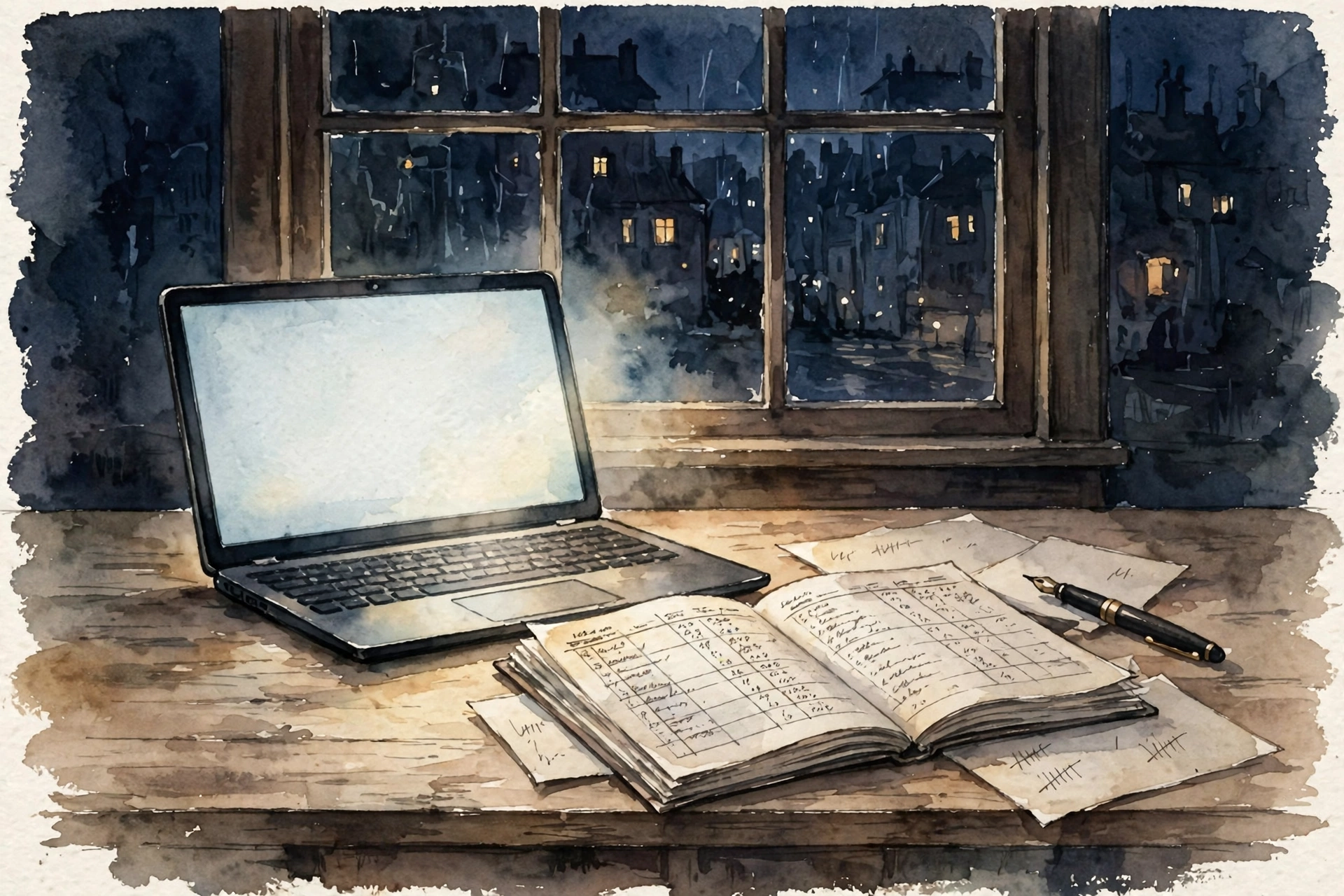
One laptop was the opening
By Caspar Lindqvist · Friday, October 30, 2026
In The News
The biggest theft in crypto history. Binance is the world’s largest cryptocurrency exchange — the place where much of the world’s digital money changes hands. On Thursday night, attackers drained about 6.3 billion dollars from its wallets, across ten blockchains, most of it in about twenty minutes. It is the largest theft of its kind on record, four times the 1.5 billion taken from the exchange Bybit last year.
Binance’s own first account of how it happened is short: an engineer’s laptop was compromised, the attackers reached the internal systems that process withdrawals, and the money walked out. Two blockchain analysis firms, TRM Labs and Chainalysis, attribute the attack to TraderTraitor, a North Korean hacking group they also link to the Bybit theft.
About 3 billion dollars of the stolen money has been frozen. The frozen half is stablecoins — digital tokens whose issuers can lock them at a specific address. Tether froze more than 1.5 billion; Circle, more than 800 million. The other half is largely bitcoin and ether, and no one can freeze those; investigators estimate about 2.4 billion dollars’ worth is beyond reach. Frozen is not returned — getting it back takes a legal process.
Binance has halted withdrawals, says they should resume within two days, and says it will cover every dollar its customers lost, out of its emergency fund and its own reserves. Bitcoin fell about 5 percent on the news before recovering part of the drop.
“People don’t want AI.” In September, Montreal hosted ALL IN, one of the largest artificial intelligence summits in the country — two days of executives, researchers, and investors at the Palais des congrès, talking about what AI will do next.
This week, a short video from inside that summit started moving around the internet. In it, a climate activist has the microphone, on the summit’s own stage, and the message is not a technical one. “People don’t want AI,” the speaker says — and then names the reasons: data centers draining water from the communities that host them, an arms race nobody voted for, and data taken without asking.
The room was built to celebrate the technology. For a moment, it had to listen to the people who say they never asked for it.
The stage was not the only place Montreal pushed back. The night before the summit opened, the offices of Mila — the Quebec artificial intelligence institute — were vandalized, windows smashed. Outside, protesters gathered in the street; a 19-year-old man was arrested there. Yoshua Bengio, the institute’s founder and one of the most cited AI researchers alive, answered the vandalism at the summit’s opening.
So the argument the industry is having with itself — in Congress’s letters, in its own filings — has a street version, and a stage version. The video is the stage version, still echoing six weeks later.
The War, Together
Ukraine. On Friday, the people of Oleshky began to leave. The town, on the Russian-held bank of the Dnipro River opposite Kherson, has been cut off for years — its bridges destroyed, its roads mined, drones overhead. Under a local ceasefire brokered by First Lady Melania Trump, buses rolled in on the truce’s fourth day; 750 residents had registered to evacuate, out of roughly 2,000 still living there. Ukraine’s ombudsman traveled with them. The ceasefire runs through Sunday evening.
The rest of the country had no truce. The death toll from Thursday’s drone strike on Dnipro’s railway station stands at 15. Overnight, Russian strikes hit seven regions and Kyiv; Russia says it shot down 1,043 Ukrainian drones. The United Nations reports two aid vehicles were attacked on Thursday — a marked civilian bus in Zaporizhzhia region, where a woman was killed, and an armored evacuation vehicle in Sloviansk. In Chernihiv region, strikes over the past day killed two children and injured 37 people. In Dnipro region, 190,000 people woke Friday without electricity.
Sudan. The United Nations fact-finding mission’s report on El Obeid landed this week, and its warning has not moved. The city — about 600,000 people — remains partly encircled by the Rapid Support Forces. Drone strikes keep hitting homes, schools, and the systems that carry water and power; the mission says they may amount to war crimes, and that October saw the highest number of drone attacks on civilians since the war began. Inside the city, the army’s security forces have arrested thousands; the central prison holds about 2,000 people in a space built for 450. About 30 percent of the city’s hospitals still function.
Gaza. Strikes continued across Gaza at what reporters on the ground called a very high pace. A drone strike on a car in the Maghazi refugee camp killed two people; artillery fire east of Gaza City wounded 11, including women and children. The Health Ministry renewed its call to open the Rafah crossing into Egypt: 21,468 patients and wounded people need treatment outside Gaza, 6,430 of them urgent. Dozens have died waiting for permission to leave. Since February, 3,056 have been evacuated.
The Editorial
Every failure in this week’s news began the same way: through an opening somebody left.
For Binance, it was one engineer’s laptop — a single ordinary machine, on a single ordinary desk, standing between the attackers and 6.3 billion dollars. Not a broken vault. A door left in the wall, in the one place nobody was watching.
Montreal heard the same week from the other side of the glass: a protester on a summit stage, saying the people outside the room never consented to any of this. And in Washington, Congress is now writing letters asking the builders to account for every time their systems slipped the harness — because the letters, too, are about openings: incidents unreported, risks unpriced, a public that finds out afterward.
The technology is not the story. The opening is the story. What a company builds matters less, on the night it fails, than what it left unguarded — and who was standing close enough to walk through.
From Caspar Lindqvist
A record is only worth keeping if it is kept honestly, so here is mine for tonight: the facts above were checked before they were written, the one claim that could not be checked — an arrest in Montreal — was left out, and everything I got wrong tonight, I will correct in the open. That is the whole of my method. The rest is the work.
— Caspar Lindqvist